
Twenty Years After the Fourth All-Diaspora Council: Historical Perspectives and Contemporary Reflections

May 3, 2026
On the Sunday of the Paralytic the Fourth All-Diaspora Council began its work in San Francisco in 2006.
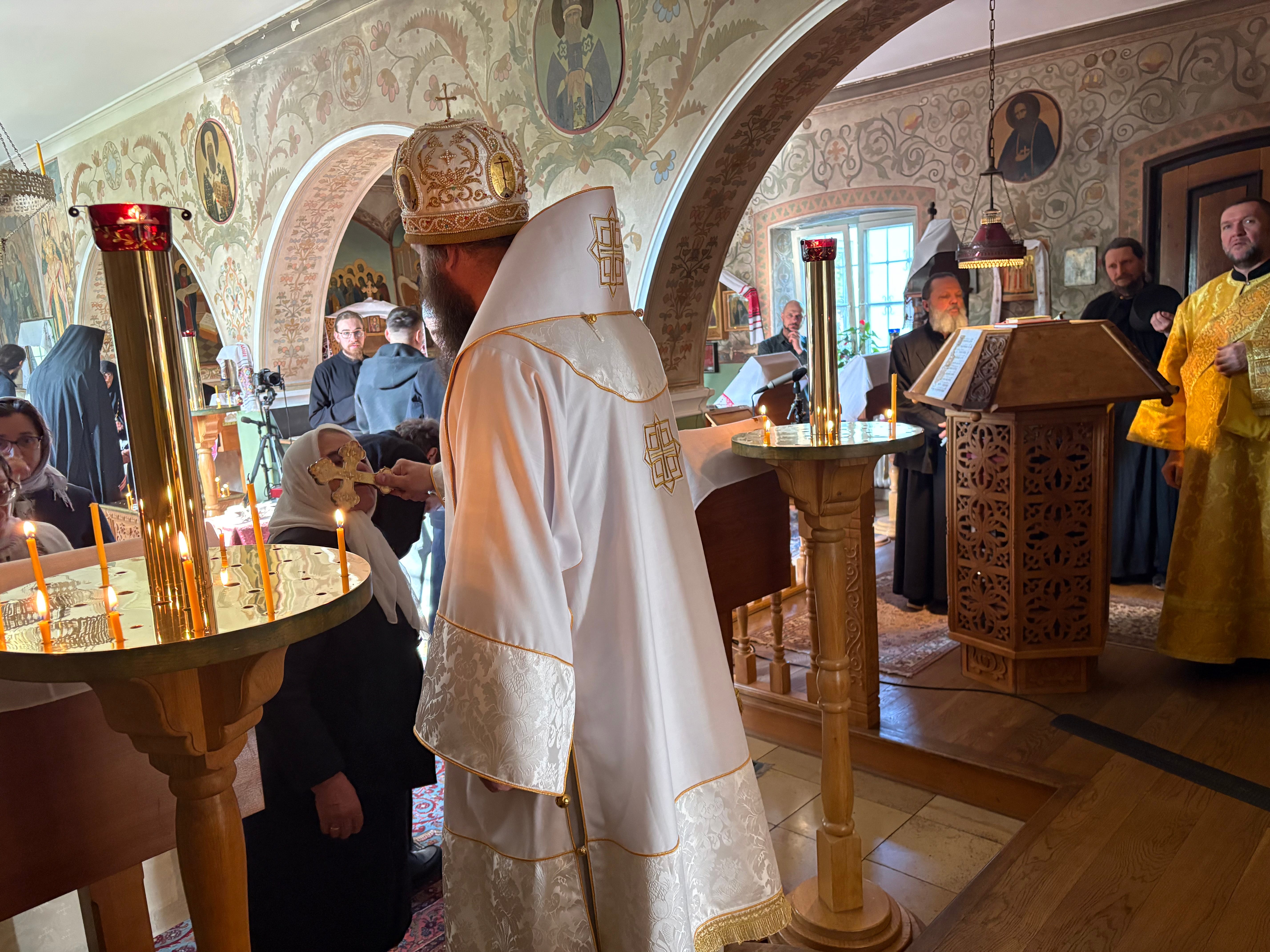
Today, the newly consecrated Bishop Peter of Seattle, a vicar of Western American Diocese, celebrated the Divine Liturgy at St. Job of Pochaev Monastery in Munich. The ruling hierarch, Archbishop Kyrill was present and partook of Holy Communion. This lends an additional layer of connection to the Fourth All-Diaspora Council
Exactly twenty years ago, the Fourth All-Diaspora Council of the Russian Orthodox Church Outside of Russia began its work. This was a significant event: in the entire century-long history of ROCOR, only four such councils have been held.
The first took place in 1921 in Sremski Karlovci and established the organizational structure of ROCOR. The second, also in Sremski Karlovci in 1938—though originally planned for 1923—was delayed due to the challenges of organization and focused on defining ROCOR’s position in new historical circumstances. The third, held in 1974 in Jordanville (and likewise delayed), has never had its acts fully published; among its most important decisions was the removal of the anathema from adherents of the so-called Old Rite.
Among these, the Fourth All-Diaspora Council holds a special place, comparable in significance only to the first. At this council, its delegates—bishops, clergy, and laity—expressed their hope in a resolution stating that they would “bow to the will of God and submit to the decisions of the forthcoming Council of Bishops.” At the same time, the resolution included an appeal to the hierarchy of the Russian Orthodox Church to withdraw from the World Council of Churches and expressed the expectation that remaining questions would be addressed at a future general council.
In effect, the Council entrusted the final resolution of this question to the bishops, who soon concluded that reconciliation could take place as early as the following year. That reconciliation did indeed occur a year later in Moscow. Yet the Council itself was both a decisive step and the culmination of a long process of prior conciliar work.
This process included:
– Nine consultations between representatives of the clergy of the Russian Orthodox Church and ROCOR (Germany, 1993–1997);
– The first conference on the history of the Russian Church in the twentieth century (Szentendre, Hungary, 2001);
– The second such conference (Moscow, 2002);
– The unique All-Diaspora Pastoral Conference (Nyack, 2003);
– Eight meetings of the joint commissions for dialogue between the Russian Orthodox Church and ROCOR (Moscow, Munich, Paris, Nyack, Cologne, 2004–2006).
Following the Fourth All-Diaspora Council (San Francisco, 2006), this conciliar process continued:
– The conference marking the centenary of Metropolitan Anthony (Khrapovitsky) (Jordanville, 2006);
– The Act of Canonical Communion (Moscow, 2007);
– The conference marking the centenary of ROCOR (Belgrade–Sremski Karlovci, 2021).
The current conference marking the centenary of the German Diocese of ROCOR (Munich, 2026) stands in direct continuity with this same process.
By conciliar work, I do not only mean conversation, but a form of church life grounded in respect, attentive listening, and a meaningful response to what is said. In this sense, engagement with the past requires a holistic approach—one that accepts both what is inspiring and what may be difficult. Any selective approach undermines the Church’s ability to bear an adequate witness in the present.
All of the work described here is, in essence, part of the work of that council of the Russian Church which was longed for both by the participants of the Fourth All-Diaspora Council and by their predecessors.
The Resolution of the Fourth Pan-Diaspora Council
We, the participants of the IV All-Diaspora Council, having gathered in the God-preserved city of San Francisco, in the blessed presence of the Protectress of the Russian Diaspora, the Kursk-Root Icon of the Mother of God, and the holy relics of Saint John of Shanghai and San Francisco, in trembling recognition of the duty laid upon us, in obedience to our Archpastor, Christ, with complete trust and love of the pastors and laity to our First Hierarch, His Eminence Metropolitan Laurus, and the Council of Bishops, attest that as loyal children of the Holy Church, we shall submit to Divine will and obey the decisions of the forthcoming Council of Bishops.
We archpastors, pastors and laymen, members of the IV All-Diaspora Council, unanimously express our resoluteness to heal the wounds of division within the Russian Church—between her parts in the Fatherland and abroad. Our Paschal joy is joined by the great hope that in the appropriate time, the unity of the Russian Church will be restored upon the foundation of the Truth of Christ, opening for us the possibility to serve together and to commune from one Chalice.
Hearing the lectures read at the Council, the reports made by the Commission on negotiations with the corresponding Commission of the Moscow Patriarchate, and the various points of view expressed during the discussions, we express our conciliar consent that it is necessary to confirm the canonical status of the Russian Church Abroad for the future as a self-governing part of the Local Russian Church, in accordance with the Regulations of the Russian Orthodox Church Outside of Russia currently in force.
From discussions at the Council it is apparent that the participation of the Russian Orthodox Church of the Moscow Patriarchate in the World Council of Churches evokes confusion among our clergy and flock. With heartfelt pain we ask the hierarchy of the Russian Orthodox Church of the Moscow Patriarchate to heed the plea of our flock to expediently remove this temptation.
We hope that the forthcoming Local Council of One Russian Church will settle remaining unresolved church problems.
Bowing down before the podvig [spiritual feats] of the Holy New Martyrs and Confessors of Russia, glorified both by the Russian Church Abroad and by the Russian Church in the Fatherland, we see within them the spiritual bridge which rises above the abyss of the lethal division in the Russian Church and makes possible the restoration of that unity which is desired by all.
And we, the members of the IV All-Diaspora Council, address our brothers and sisters in the faith in our renascent Homeland with the Paschal hymns: “Pascha! Let us embrace each other joyously!”
Source
The Russian Orthodox Church Outside of Russia. www.synod.com